
A Journey into the Art of Burning Plants
I have always loved burning dried plants from my garden, offering their smoke as a quiet gesture of gratitude and creating space for contemplation. Over the years, I began to notice the subtle variations in how different plants burn, the way certain combinations change the feeling of a room, and how intention shapes the experience.
My vocabulary around incense started small, then suddenly widened when I joined the School of Aromatic Medicine in the United States. There I entered a world of vast and ancient knowledge, one that revealed the cultural, medical, and ceremonial uses of incense across every continent.
Most books agree that the history of incense begins in Egypt, 4,500 years ago, with Queen Hatshepsut. But in my own research I came across something that changed everything: evidence that long before Egypt, Southern Africa held its own incense traditions. Archaeology shows that people here were burning flowers in caves tens of thousands of years ago, and that southern Africa may well be the oldest ritual landscape on Earth.

The Oldest Ritual Landscape
South Africa holds one of the largest diversities of aromatic plants in the world. The Cape Floral Kingdom alone contains more plant species per square kilometre than almost anywhere else on the planet, and a remarkable proportion of them are aromatic — resinous, oily, fragrant, alive with volatile chemistry.
Analyses of ancient hearths show people were burning flowers — not just wood — in caves long before recorded history. In every Southern African tribe, flowers and aromatic plants are still burned at ceremonies, weddings, births, deaths, healings, and transitions. The thread has never been broken.
The Western Cape remained habitable during the last Ice Age. It was a climatic refugium, warmed by the Agulhas Current and rich in bulbs, shellfish, and aromatic flora. This stability allowed for one of the longest continuous human populations anywhere on Earth. If early humans invented ritual, ceremony, and symbolic behaviour deep in prehistory, then Southern Africa is one of the most likely landscapes where it began. Ritual fire, aromatic smoke, processions, trance states, healing — these were part of life here tens of thousands of years before the temples of the Mediterranean were built.
We were not creating incense. We were remembering it.

Hatshepsut and the Land of Punt
In the fifteenth century BCE, the great female pharaoh Hatshepsut sent a fleet south from Egypt in search of incense. She was looking for the source — the place from which frankincense and myrrh were said to come, a land her people called Punt.
On the walls of her mortuary temple at Deir el-Bahari, the journey is recorded in extraordinary detail. The hieroglyphs show her ships loaded with gold, ebony, ivory, panthers and panther skins, baboons, and — most precious of all — thirty-one living myrrh trees, their root balls carefully wrapped, transported alive across the sea to be replanted in the temple gardens of Egypt. It is the earliest recorded plant expedition in human history.
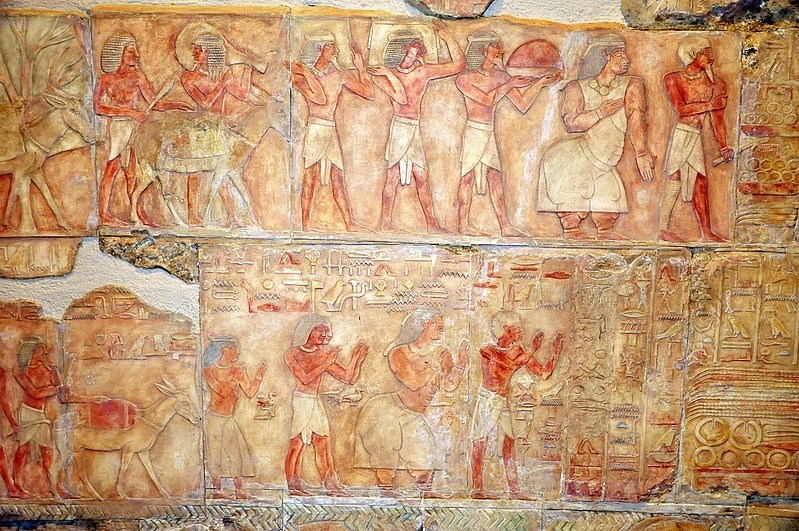
Where exactly was Punt? Scholars have debated this for over a century. The leading theory now places Punt in the region of present-day Zimbabwe and Mozambique — a southern African land of aromatic forests, gold, and a sophisticated culture that traded along the Indian Ocean coast. If this is correct, the incense that perfumed the temples of the Nile came from the same broad cultural and ecological landscape that holds the deep root of our own work.
The implications are quietly extraordinary. The aromatic pharmacopeia of Egypt — and through Egypt, of the Mediterranean, the Levant, and eventually the whole of the ancient world — may have travelled north from southern Africa long before recorded history. Our flowers, our resins, our smoke. The trade route ran from the cradle outward, not inward.
Returning to Plant Intelligence
The real ignition point for this project came shortly after a trip to India, where I saw a modern return to chemical-free incense. Almost at the same time, the Gouritz Cluster Biosphere Reserve emailed to ask whether I had a botanical project to propose. I knew instantly: a hand-made South African incense range exploring the deep origins of incense on our own soil.
For years we had worked with aromatic plants — growing them, distilling them, binding them into smudge wands, teaching the old ways. As I learned more about the dangers of inhaling chemical agents, I developed a strong aversion to the flat, synthetic odours of commercial bamboo sticks. These products often carry chemical binders, burning agents, stabilisers, and artificial fragrances that enter the lungs, bloodstream, and liver. If incense is meant to purify and heal, how can it be built from compounds that stress the body?
One of the foundations of Yamù is a commitment to whole-plant intelligence and the deep emotional and spiritual connection that comes when we work with plants as they are. Incense became another language for me, another elemental pathway into the soul of each plant.
The Plants
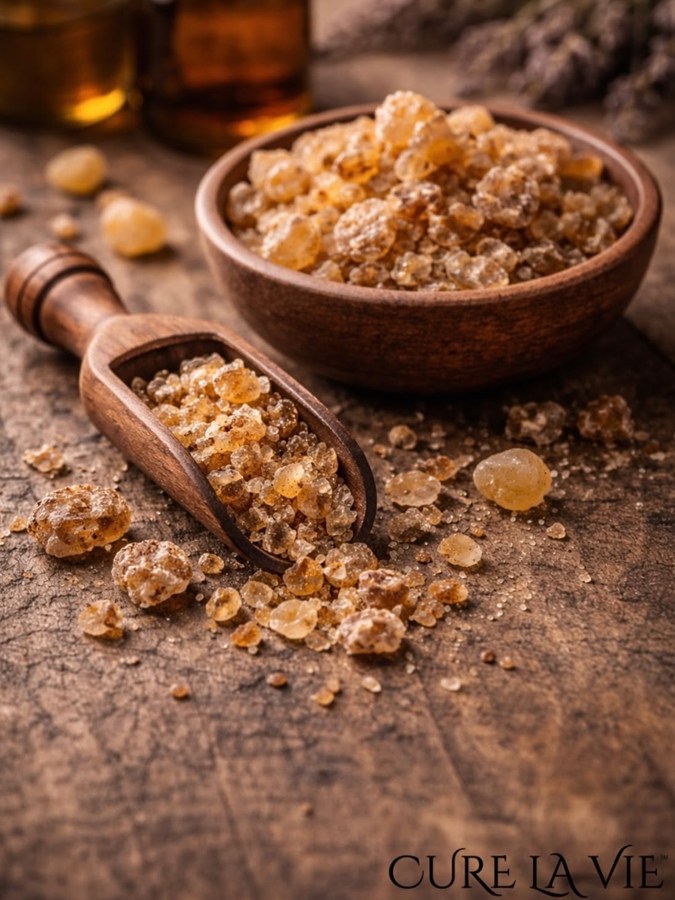
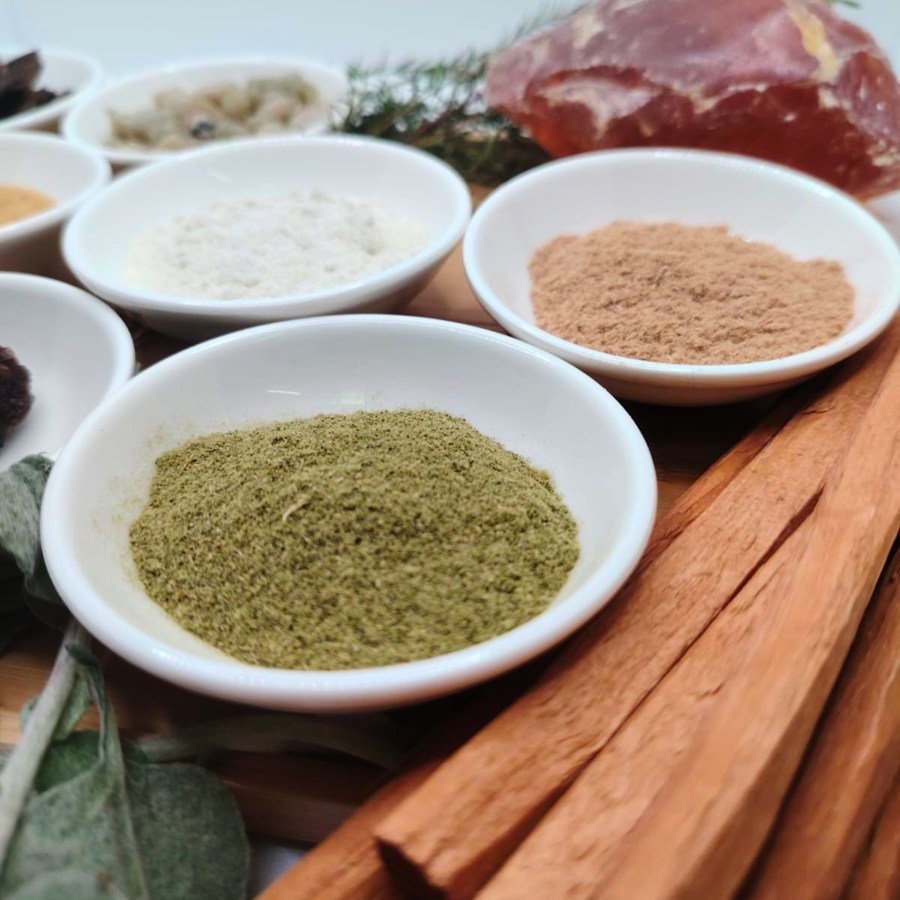
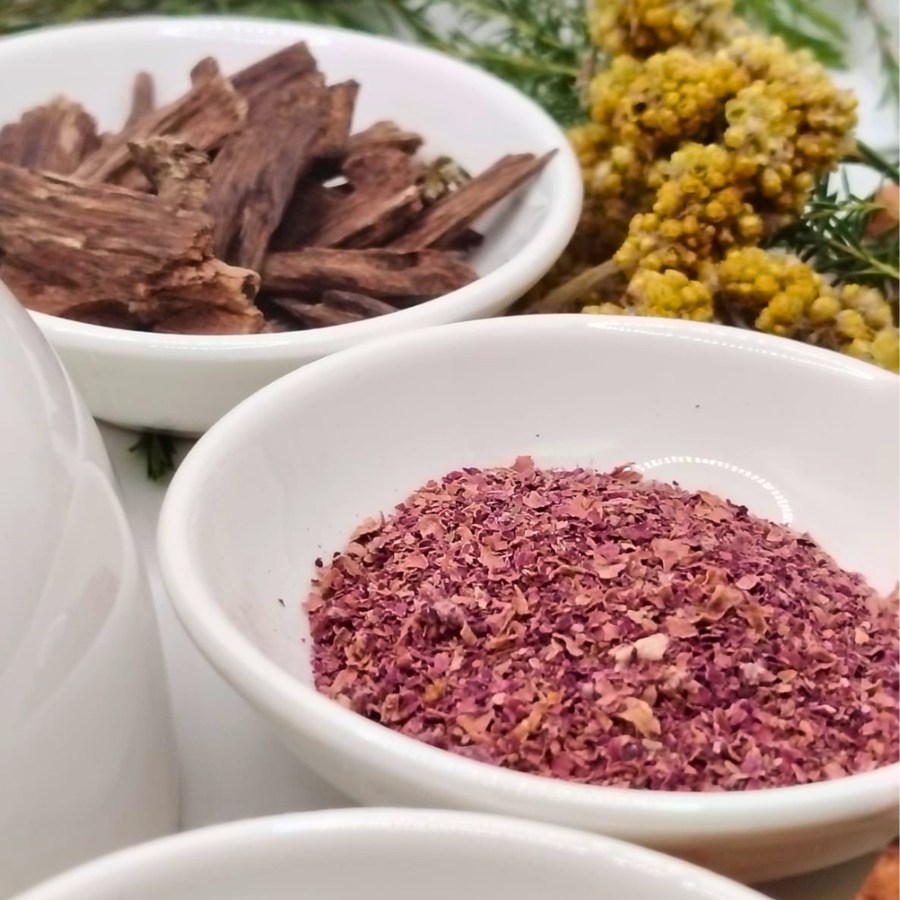
We returned to the raw materials: the resins, woods, flowers, and leaves of the plants themselves. Each carries its own teaching.
Artemisia afra opens the breath and protects. Buchu brings clarity and lightness. Helichrysum offers warmth and memory, a deep ancestral embrace. Coleonema softens the mental field and restores equilibrium. These are not interchangeable scents — they are distinct intelligences, each with a long history of ceremonial and medicinal use in this land.
We harvest with care, following sustainable guidelines developed in collaboration with the Gouritz Cluster Biosphere Reserve. Some plants come from our own gardens in Barrydale, others from wild stands tended over many seasons. Nothing is taken in excess. Every plant is gathered with permission — the kind that comes from years of relationship with the same hillsides, the same valleys, the same returning bloom.

The Craft
Crafting incense from these ingredients requires patience and respect. We didn’t want to imitate a factory product. We wanted to learn the true art of burning plants — how fire transforms matter into spirit; how aromatic molecules shift when heated; how combinations create new medicines; how moisture, airflow, and grind size influence the burn from beginning to end.
The process is slow. Plants are dried at the right humidity, ground to the right texture, blended in the right proportions, bound with natural materials, shaped by hand, and dried again. After months of testing — adjusting ratios, refining textures, watching how each batch burned — we finally reached a recipe that burns cleanly and evenly, releasing a purely floral, resinous scent. Nothing but plants speaking in their own voices.
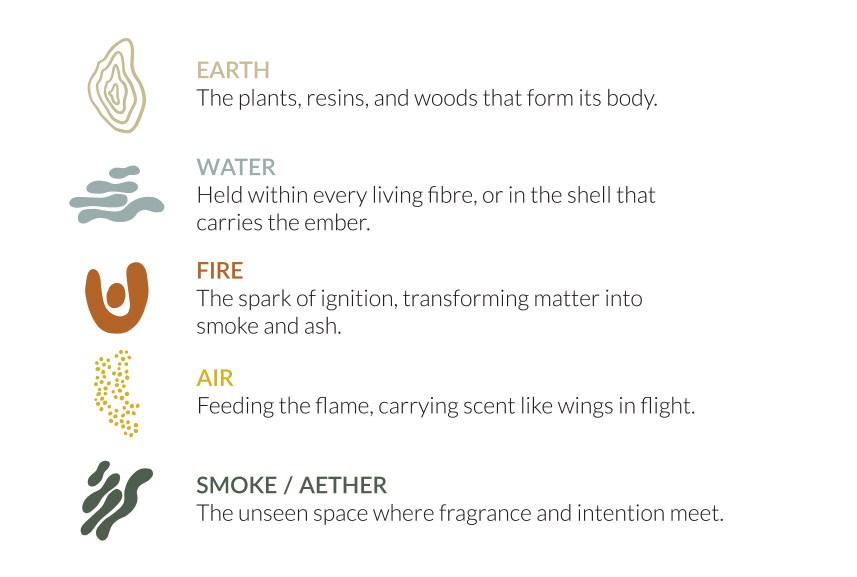
Earth, water, fire, air — incense is the only craft that holds all four at once.
Earth is the plant body itself: resin, leaf, flower, root. Water is the plant’s volatile oils, its stored memory and emotional signature. Fire is the catalyst that releases the plant’s intelligence, transforming matter into spirit. Air carries the smoke — the message, the prayer, the medicine.
When we burn plants, we invite all four elements into a moment of unity. This is why incense traditions are everywhere. It is not merely fragrance. It is cosmology. It is communication. It is a way of aligning the elements inside us with the elements in nature.
Our First Two Blends
Our first two incense blends carry the story of origins.
CRADLE
Helichrysum & Buchu
This blend honours southern Africa as the cradle of incense traditions. Helichrysum — long used in rites of passage, cleansing, protection, and prayer — carries the warmth of ancestral fire. Buchu brings freshness, clarity, and a bright, uplifting spirit. Together they form a gentle yet powerful smoke, one that feels both ancient and familiar.
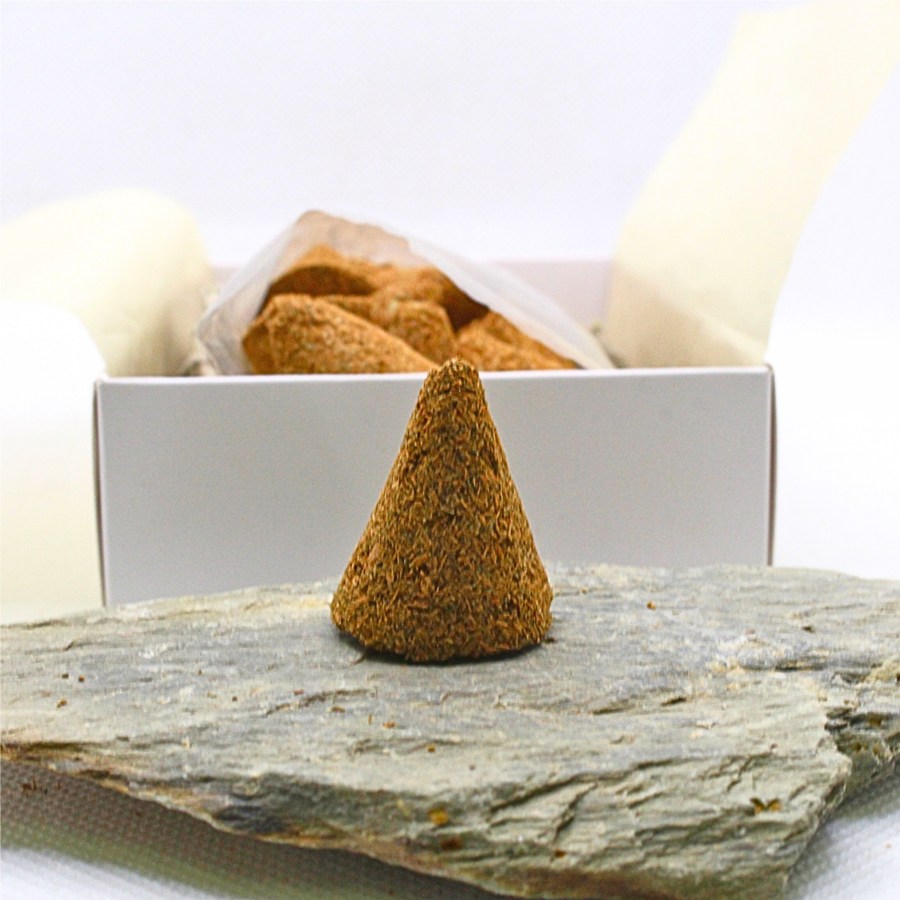
THE TWO GODDESSES
Coleonema & Artemisia afra
The second blend tells a mythic meeting: Queen Hatshepsut of Egypt and Queen Ati of Punt, two women rulers connected through aromatic trade. Coleonema offers a sweet, softening scent, while Artemisia afra brings strength, intelligence, and protection. Their union creates a smoke that feels regal, feminine, and deeply grounding — an echo of two ancient worlds greeting each other across land and sea.

More variants are in development, each one drawn from a thread of this story — the trees of Punt, the goddesses of the Nile, the plants that grow in our own valleys. The work continues.
The Gouritz Cluster Biosphere Reserve
None of this would have been possible without the Gouritz Cluster Biosphere Reserve. The GCBR is a UNESCO-recognised biosphere covering more than three million hectares across the southern Cape — a vast living region where three of South Africa’s major biomes meet: fynbos, succulent Karoo, and thicket. It is one of the most botanically diverse landscapes on Earth, and the place from which our incense plants come.
When the GCBR invited us to propose a botanical project, the conversation that followed was unusually generous. They gave us the time to do the work properly: to refine our methods, to develop sustainable harvest guidelines, to test and re-test the recipes, to commission original artwork, and to bring the boxes from briefing to mock-ups to finished print. They funded what could not be rushed.
More than that, they understood what we were trying to do. The story of South African incense — its deep history, its ecological richness, its place in a global lineage — is exactly the kind of story a biosphere reserve exists to protect. Our incense is, in a real sense, a small ambassador for the GCBR’s wider mission: to keep this region’s biodiversity alive, valued, and known.
This project is supported by the Gouritz Cluster Biosphere Reserve.
The Boxes — Michelle Berry
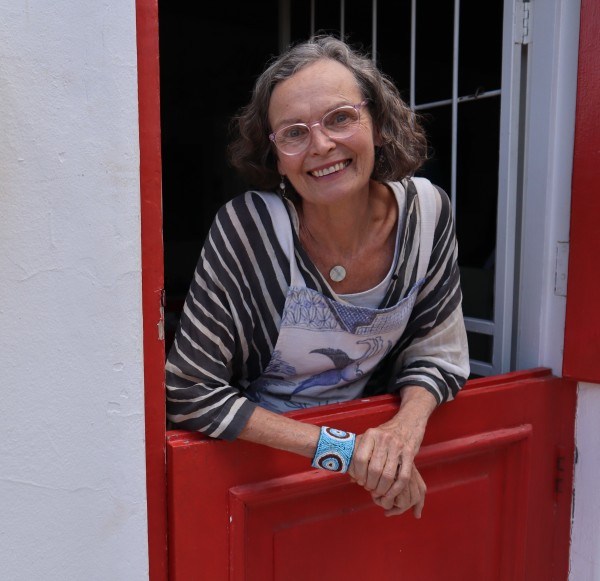
The artwork that wraps each Yamù incense box is the work of Michelle Berry, a Barrydale-based painter whose practice has unfolded across decades of quiet, persistent making. Trained in fine art graphics at Technikon, she moved through years of textile work — silkscreen and hand-painted fabrics — while always keeping a small canvas on the kitchen table, attended to whenever time allowed. That quiet readiness has now become her central practice. From her studio in Barrydale, surrounded by the light and rhythm of the Klein Karoo, she paints worlds that feel both rooted and dreamed.
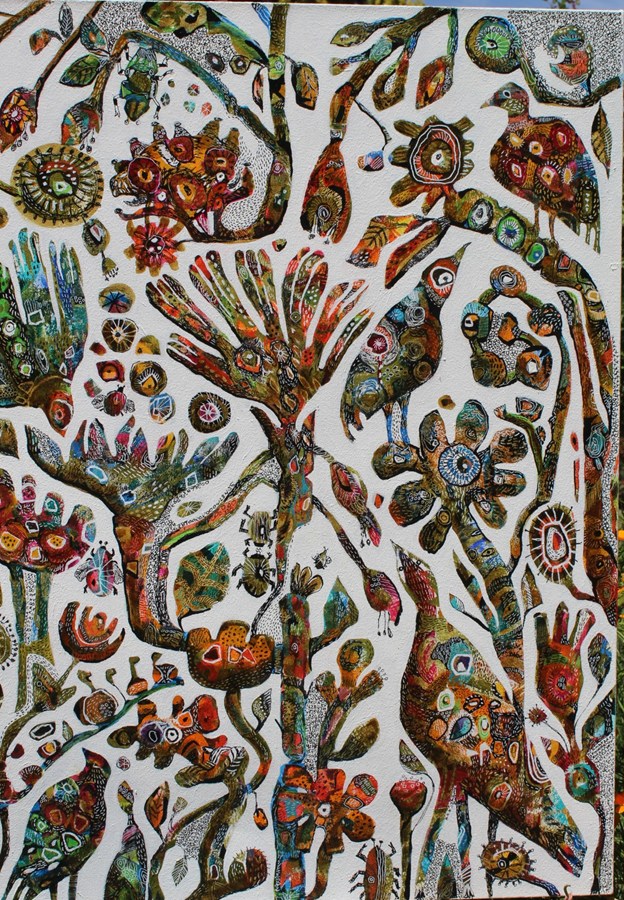
Her paintings are dense, intricate ecologies. Stylised proteas, fynbos forms, birds, insects, and plant-like hands gather and intertwine across the surface, each shape filled with patient mark-making — tiny dots, fine lines, beadwork-like detail. The palette draws directly from the landscape that surrounds her: earthy reds and ochres, mossy greens, deep browns, with sudden flashes of turquoise and coral. There is a folkloric quality to her work, a sense that what she paints is not merely observed but remembered — the veld seen through the eyes of something older than us.
In her own words: “Image making — that simple act of pen to paper, brush to canvas or needle to etching plate — has been a quiet and perpetual force in my remembered years. On the back burner the readiness for more committed art simmered. That time has finally arrived. May the images flow.”
Her work felt immediately right for Yamù. The incense and the artwork share the same source: the fynbos, the Klein Karoo, the slow attention paid to small living things. Where the incense releases the scent of the plants, Michelle’s painting releases their image — both are acts of translation, of letting the land speak through a chosen medium. To hold one of the boxes is to hold a piece of her landscape, and ours.

A Journey of Love
The origins of this work are rooted in love — a love for the plants and the ever-unfolding discovery of their magic, language, and medicine; a love for aroma and the way it resets and realigns the emotional landscape; and a love for sharing this beauty with others. The path has been rich with learning: testing burn rates, refining textures, sourcing with integrity, navigating design challenges, adjusting the manufacturing process again and again. None of it was straightforward, yet every step was meaningful.
Today our incense carries the integrity of the plants, the patience of the craft, the creativity of South African artisans, the support of a dedicated biosphere reserve, and the ancient lineage of this land’s aromatic traditions. It is something we love deeply — and something people feel and respond to wherever we go.
From the cradle, into your hands.

